Quick Answer:
- Dubai freehold property for foreigners has been legal in designated zones since 2002.
- No UAE residency visa is required, only a valid passport to purchase.
- Non-resident Melbourne buyers typically access 50 to 60% mortgage financing.
- Freehold property worth AED 2 million qualifies for a 10-year Golden Visa.
- Dubai charges zero income tax, capital gains tax, and annual property tax.
Melbourne investors keep asking the same question before they commit real money to Dubai. Can a foreigner actually own the land and the building outright, or just lease it for a few decades? Dubai freehold property for foreigners answers that question directly, and the answer favours the buyer.
This guide solves that uncertainty with the actual rules, not marketing claims. Dubai freehold property for foreigners covers eligible zones, the documents a Melbourne buyer needs, and financing without UAE residency. Every figure comes from the Dubai Land Department and licensed market sources, not guesswork.
This Dubai freehold property for foreigners guide covers eligible areas, ownership costs, mortgage access, and the Golden Visa threshold. You will also find a straight comparison against Melbourne’s own property market. By the end, you will know exactly where you stand as a buyer.
What Is Dubai Freehold Property?
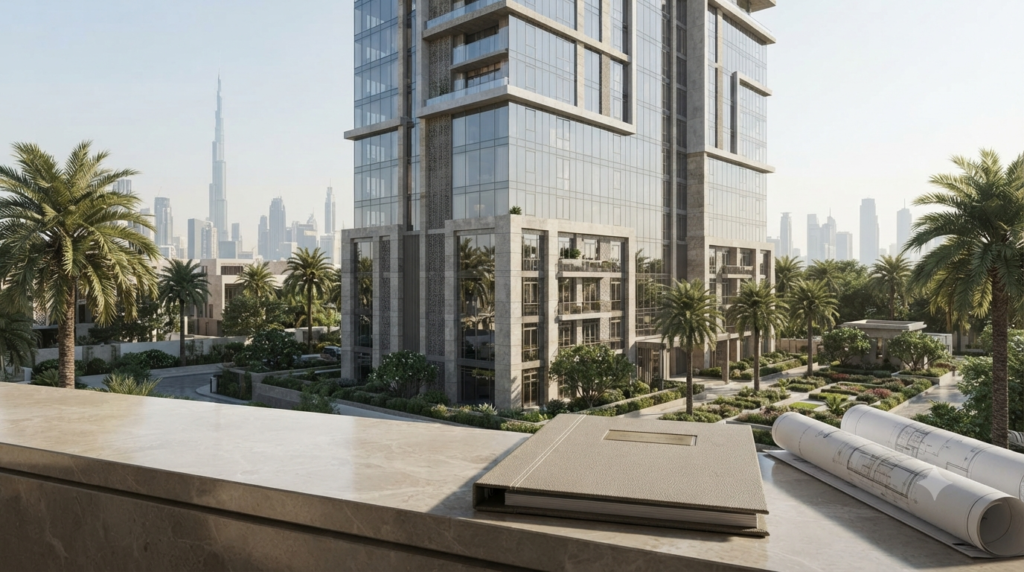
Dubai freehold property for foreigners means full, permanent ownership of land and building together. It is the strongest form of title available to a non-UAE national anywhere in the emirate.
Freehold vs Leasehold
The difference comes down to time and control.
- Freehold grants ownership with no expiry date or renewal requirement
- Leasehold caps ownership at a fixed term, usually up to 99 years
- Freehold owners can sell, mortgage, or gift the property freely
- Leasehold rights revert to the landowner once the term ends
- Freehold status appears clearly on the title deed and DLD records
Confirm any listing sits inside a freehold zone before signing. The title type changes every right that follows for Dubai freehold property for foreigners.
Legal Ownership Basis
Dubai opened freehold ownership to foreigners in 2002. Law No. 7 of 2006 later formalised the framework.
- The Dubai Land Department registers every freehold sale and issues the title deed
- RERA, the Real Estate Regulatory Authority, oversees developers and transactions
- Off-plan payments sit in escrow accounts protected by law
- Interim ownership on off-plan units is tracked through the Oqood system
- Ownership disputes are handled through Dubai’s specialised Real Estate Court
These protections exist because Dubai wanted foreign capital to feel secure. A Melbourne buyer of Dubai freehold property for foreigners gets the same registration security as a UAE national.
Who Can Buy
Eligibility is broader than most Melbourne investors expect.
- Any foreign national aged 21 or older can purchase
- No UAE residency visa or Emirates ID is required beforehand
- A valid passport is the only identity document needed to transact
- Australians already hold clear buying rights under current Dubai property law
- Individuals and foreign-registered companies can both hold freehold title
Age and passport aside, the one condition that actually matters is location. The property has to sit inside a zone the government has designated as freehold.
Understanding what freehold means is only half the picture. Where you are allowed to buy determines nearly everything else about price, yield, and long-term demand.
| Feature | Freehold | Leasehold |
| Ownership term | Unlimited | Up to 99 years |
| Land ownership | Yes, land and building | No, lease only |
| Right to sell | Full, at any time | Often needs landlord consent |
| Mortgage eligible | Yes, standard lending | Rarely offered by banks |
| Inheritance | Passes to heirs or named beneficiaries | Reverts to landowner at term end |
The gap between these two ownership types explains a lot. Almost every serious foreign buyer, Melbourne investors included, sticks to Dubai freehold property for foreigners rather than leasehold deals.
Understanding the legal framework behind Dubai freehold property for foreigners is the first step toward investing with confidence. The next decision is choosing the right freehold location, where rental demand, capital growth, and long-term returns can vary significantly.
Where Can Foreigners Buy?
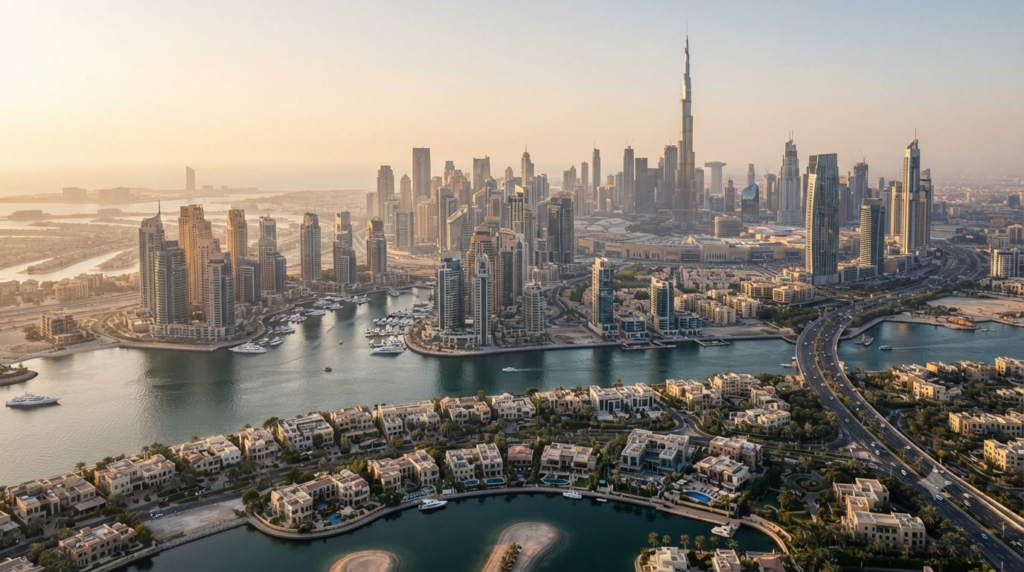
Dubai freehold property for foreigners is limited to designated freehold areas. Those areas now cover most of Dubai’s best-known districts.
Established Prime Areas
These communities carry the longest track record and the deepest resale markets.
- Dubai Marina offers waterfront living with strong short-term rental demand
- Downtown Dubai commands premium pricing near the Burj Khalifa and Dubai Mall
- Palm Jumeirah suits buyers chasing branded villas and long-term appreciation
- Business Bay draws corporate tenants and steady year-round occupancy
- Resale volume in these areas stays strong even during slower cycles
Prices in these areas run higher, but so does liquidity when it is time to sell.
Emerging Growth Zones
Newer freehold districts trade lower entry prices for a longer growth runway.
- Jumeirah Village Circle remains Dubai’s most transacted community by volume
- Dubai Hills Estate blends family villas with an Emaar-backed masterplan
- Dubai South sits near Al Maktoum International Airport’s ongoing expansion
- Dubai Creek Harbour anchors Emaar’s next major waterfront district
- Entry prices in these zones sit well below the established areas above
Best Dubai investment properties for Melbourne buyers tend to cluster in exactly these growth corridors right now.
Area Matches Goals
Area choice should follow strategy, not just budget.
- Income-focused buyers should prioritise Jumeirah Village Circle or Business Bay
- Growth-focused buyers should look at Dubai South or Dubai Creek Harbour
- Lifestyle buyers usually settle on Dubai Marina or Palm Jumeirah
- Family buyers gravitate toward Dubai Hills Estate for schools and parks
- First-time buyers often start small with a single well-located apartment
There is no single best area for every Melbourne investor. The right zone for Dubai freehold property for foreigners depends on whether you want income now or growth later.
Once an area fits your goal, the next question is cost. The table below lines up five popular freehold communities against current entry pricing and yield.
| Area | Entry Price (AED) | Approx. AUD | Gross Yield |
| Jumeirah Village Circle | 550,000 | 215,000 | 6% to 8% |
| Dubai Marina | 900,000 | 350,000 | 6.6% |
| Business Bay | 1,200,000 | 470,000 | 7.1% |
| Dubai Hills Estate | 1,100,000 | 430,000 | 6.7% |
| Downtown Dubai | 1,400,000 | 550,000 | 6.0% |
Notice that Business Bay, the highest-yielding area here, is neither the cheapest nor the most expensive listing. Entry price and rental return do not always move together. That is exactly why matching area to strategy beats chasing the lowest sticker price.
How Do Melbourne Investors Purchase?

The purchase process for Dubai freehold property for foreigners is remote-friendly and runs on a fixed sequence of steps.
Documents You Need
Paperwork is lighter than most Australian property transactions.
- A valid passport copy for identity verification
- Proof of address, such as a recent utility bill
- A signed Sales Purchase Agreement or Memorandum of Understanding
- Bank statements only if you are applying for financing
- No physical presence in Dubai is required to submit any of it
Once documents are ready, most Melbourne buyers can complete the purchase within two to six weeks.
Financing As Foreigner
Cash is common, but financing is available and worth understanding.
- Non-resident buyers typically access 50% to 60% loan-to-value
- UAE resident expats can reach up to 80% on properties under AED 5 million
- Off-plan financing is usually capped near 50% loan-to-value
- Rates in 2026 generally sit between 4.8% and 6.5% for non-residents
- Pre-approval typically takes one to two weeks once documents are submitted
A larger deposit is the trade-off for buying Dubai freehold property for foreigners without UAE residency.
Registration And Fees
Every transaction closes through the same government channel.
- The Dubai Land Department charges a 4% transfer fee on the purchase price
- A title deed fee of roughly AED 250 to 580 applies on registration
- Financed buyers pay a 0.25% mortgage registration fee
- Agency commission typically runs 2% of the purchase price
- The buyer, not the seller, generally covers the DLD transfer fee
Budget 7% to 8% above the purchase price to cover every fee comfortably. Skipping this buffer is the most common mistake first-time foreign buyers make.
Financing terms differ sharply by residency status, and the gap catches many first-time buyers off guard. The table below breaks down what residents and non-residents can realistically expect from UAE banks in 2026.
| Buyer Type | Typical LTV | Deposit Needed | 2026 Rate Range |
| UAE resident, first property | Up to 80% | 20% | 3.99% to 5% |
| Non-resident, ready property | 50% to 60% | 40% to 50% | 4.8% to 6.5% |
| Non-resident, off-plan | Up to 50% | 50%+ | Varies by bank |
Melbourne investors without UAE residency should plan around the middle row. It is the realistic baseline for Dubai freehold property for foreigners, not the best-case scenario some listings advertise.
Why Buy Freehold Property?

The financial case for Dubai freehold property for foreigners rests on three pillars: tax, yield, and residency access.
Zero Tax Advantage
Dubai charges nothing on the income a freehold property generates.
- No annual property tax on freehold real estate
- No capital gains tax when the property is sold
- No personal income tax on rental earnings within the UAE
- Only the one-time 4% transfer fee applies at purchase
- Property management fees remain the main recurring cost for owners
Melbourne owners must still declare Dubai rental income to the ATO. The absence of UAE-side tax still keeps more of that income intact.
Rental Yield Potential
Yield is where the Melbourne comparison becomes hard to ignore.
- Melbourne gross rental yields sit near 3.2% to 4.5% in most suburbs
- Dubai freehold apartments regularly deliver 6% to 9% gross yield
- Some growth communities push past 8% in strong rental cycles
- Dubai rental properties for Melbourne investors cover area-by-area yield data in more depth
- Short-term rental licensing can push effective yield even higher in tourist zones
A three to four percentage point gap compounds quickly across a ten-year hold.
Golden Visa Path
Property investment can also secure UAE residency rights, not just income.
- AED 2 million in freehold property qualifies for a 10-year Golden Visa
- The visa covers the investor, spouse, children, and often parents
- AED 1 million qualifies buyers aged 55 and over for a 5-year retirement visa
- Dubai’s Golden Visa property rules apply the same way to Melbourne applicants as any other foreign buyer
- Visa processing typically takes 30 to 60 days after registration
Residency is optional, not required. That is why many buyers treat it as a bonus, not the main goal.
Tax savings, stronger yield, and visa access rarely arrive together in one asset class. Dubai freehold property for foreigners currently offers all three at once. That combination is the real reason demand from Melbourne keeps climbing.
The numbers below make the residency side concrete. Both thresholds are one-time investment levels, not annual costs.
| Visa Type | Minimum Investment | Approx. AUD | Duration |
| Golden Visa | AED 2,000,000 | 780,000 | 10 years, renewable |
| Retirement Visa (55+) | AED 1,000,000 | 390,000 | 5 years |
Both thresholds sit within reach of a single well-chosen property. Many buyers structure their purchase around one of these two figures from day one.
For a broader view of where Dubai’s market sits in late 2026, see this Melbourne investment comparison. It breaks down pricing trends alongside the freehold data above.
Invest in Dubai Freehold Property with Confidence
Dubai freehold property for foreigners gives Melbourne investors something the local market cannot match. Full ownership, zero rental tax, and yields that regularly beat Victoria’s returns by a wide margin. The rules are clear, and the zones are well defined. The paperwork runs through a regulated system built for international buyers.
None of that removes the need for homework. Confirm the zone, compare loan-to-value offers, and budget the full 7% to 8% in transaction costs before you commit. Buyers who do this reach settlement with no surprises. They end up with a property for sale in Dubai that performs as the numbers promised.
Start with a shortlist of freehold areas that match your budget and hold period. Visit dubaipropertyexpomelbourne.com.au to explore current listings and book a free consultation with a licensed Dubai property advisor.
Frequently Asked Questions
Can foreigners really own freehold property in Dubai?
Yes. Dubai freehold property for foreigners has been legal since 2002, when the government opened designated zones to non-UAE nationals. Buyers get full title over land and building. They can sell, lease, mortgage, or pass the property to heirs. The Dubai Land Department registers every transaction and issues the title deed.
How much money do Melbourne buyers actually need?
Entry prices in Jumeirah Village Circle start near AED 550,000, close to AUD 215,000 today. Cash buyers need that amount plus roughly 7% to 8% in fees. Financed buyers should budget a 40% to 50% deposit, since non-residents rarely qualify for more than 60% loan-to-value.
Can Australians get a mortgage without UAE residency?
Yes, several UAE banks lend to non-residents, though terms are stricter than for residents. Expect 50% to 60% loan-to-value, a larger deposit, and rates that typically run higher than resident pricing in 2026. The property must sit inside a freehold zone for a bank to finance it at all.
Do I need to live in Dubai to keep the property?
No. Freehold ownership carries no residency requirement and no minimum stay. Many Melbourne investors manage Dubai freehold property for foreigners entirely remotely. A licensed property manager and power of attorney cover settlement if you cannot travel.
What happens to the property if the owner dies?
Dubai freehold property for foreigners passes to heirs under UAE inheritance rules unless the owner registers a will. Non-Muslim owners can file a will through the DIFC Wills Service. This lets them name beneficiaries directly instead of defaulting to Sharia-based distribution. Most foreign investors register a will soon after purchase.