Quick Answer
-
Budgeting the sticker price, not six percent more
-
Comparing Dubai gross yield against Australian net
-
Never checking the building's approved service charge
-
Assuming handover arrives on the promised date
-
Raising rent above the legal capped amount
Nobody loses money on Dubai property because they picked the wrong tower. They lose it because they budgeted the purchase price and nothing else, or because they read a yield figure that quietly excluded every cost of owning the thing.
The Dubai property mistakes that hurt Australian buyers are almost all errors of process rather than judgement. Each one is avoidable in minutes, because the information that prevents it is published free by the Dubai Land Department and sits there waiting to be checked. Most buyers simply never look, because nobody tells them the checks exist.
This guide covers why overseas buyers get caught in the first place, the errors made before contracts are signed, what goes wrong at handover, and the ownership mistakes that compound year after year. Every figure comes from a primary source, and anything that could not be verified has been left out.
Why These Mistakes Happen
None of these errors come from carelessness. They come from a structure that makes certain information hard to reach from eleven thousand kilometres away.
The Distance Problem
An Australian buyer usually cannot inspect the apartment, meet the owners' association, or walk the building before committing. Everything arrives through an intermediary who is paid when the sale completes.
That is not an accusation of bad faith. It is simply that the person showing you the property has no reason to volunteer the annual service charge, and you have no reason to know the figure exists until the first invoice lands.
Distance removes the informal checks a local buyer gets for free, so the formal checks matter far more.
Marketing Versus Reality
Dubai marketing aimed at overseas buyers leads with returns. It rarely leads with the cost structure underneath those returns.
Three gaps show up again and again in the material Australians are sent.
-
Entry costs quoted as the purchase price alone
-
Yield quoted gross, never net of charges
-
Handover dates quoted as certainties
Those three omissions account for most of the unpleasant surprises in the first year of ownership.
The material is not usually false. It is selective, which is harder to spot and just as expensive.
Who Pays Most
The buyers who get hurt are rarely the cautious ones. They are the ones buying at the top of their budget, where a six percent cost overrun forces a scramble.
A buyer with room to move absorbs an unexpected AED 60,000 in fees. A buyer who committed every dollar to the deposit does not. The same mistake costs one person an inconvenience and the other person the transaction.
Headroom is the cheapest insurance available, and it costs nothing to build in.
These errors trace back to information gaps rather than poor decisions. The fix is a short list of checks run before money moves. The rest of this guide is that list, stage by stage.
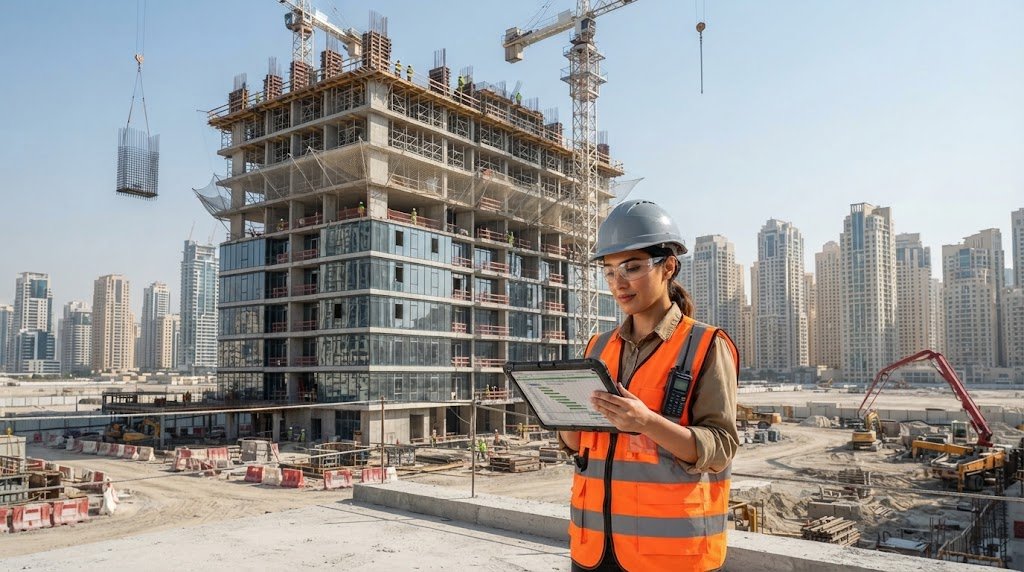
Dubai Property Mistakes Before Buying
The pre-purchase stage is where the costliest errors happen, because this is where the numbers get fixed in your head and everything later is measured against them.
Budgeting The Sticker
The purchase price is not the purchase cost. The Dubai Land Department charges a four percent transfer fee on the registered sale price, paid at the trustee office on transfer day, and agent commission typically adds another two percent.
The table below shows what that means on a AED 1,500,000 apartment.
|
Cost |
Rate |
On AED 1,500,000 |
|
DLD transfer fee |
4 percent |
AED 60,000 (AUD 22,800) |
|
Agent commission |
2 percent, typical |
AED 30,000 (AUD 11,400) |
|
Registration and trustee fees |
Scales with value |
Confirm at the trustee office |
|
Typical all-in |
6 to 8 percent |
AED 90,000 to 120,000 |
Registration and trustee amounts vary between published sources, so confirm the exact figures rather than working from an estimate.
There is a second trap inside this one. The transfer fee is paid by cashier's cheque drawn on a UAE bank, which means you need a UAE bank account, and opening one as a non-resident takes weeks rather than days. Quote your budget at purchase price plus six to eight percent from the start, and open the account early.
Trusting Gross Yield
Gross yield is annual rent divided by purchase price. It ignores every cost of ownership, and it is the only figure most marketing material shows.
Net yield is what survives after service charges, management fees, and vacancy. In Dubai, the gap between the two typically runs one and a half to two and a half percentage points, and service charges are the largest single reason for it.
The comparison below shows where the money goes on a tenanted apartment.
|
Line |
Effect on your return |
|
Gross yield |
Rent divided by price, before any costs |
|
Service charge |
Largest single deduction, set per building |
|
Management fee |
Around 5 percent of annual rent |
|
Vacancy |
Weeks between tenancies, rarely modelled |
|
Net yield |
Typically 1.5 to 2.5 points below gross |
Those four deductions are predictable, which means there is no excuse for leaving them out of a projection.
The error Australians make most is comparing a Dubai gross figure against the net figure they already know from an Australian investment property. That is not a comparison; it is a mismatch, and it flatters Dubai by roughly two percentage points. Our Dubai rental properties guide works through the calculation properly.

Skipping The Building
Service charges are approved building by building, not by area, and the spread across Dubai is enormous. Two apartments of identical size in the same city can differ by tens of thousands of dirhams a year.
Here is the range by property type.
|
Property type |
AED per sq ft per year |
|
Villas and townhouses |
3 to 7 |
|
Mid-market apartments |
11 to 16 |
|
Established apartments |
15 to 25 |
|
Prime and branded towers |
25 to 35 |
|
Ultra prime, such as Burj Khalifa |
Approaching 68 |
The median across Mollak-registered buildings sits near AED 17 per square foot, but the median is useless to you. Only your building's approved rate matters.
You can check it for free on the Dubai Land Department's service charge index, or search the specific tower on the Mollak public index. It takes two minutes, and it is the single most useful check an overseas buyer can run. If you are still choosing between communities, our guide to the best areas to invest in Dubai sets out how they differ.
The pre-purchase stage rewards a few minutes of checking more than any other part of the process. Budget the real entry cost, compare net against net, and pull the approved rate for the actual building. Everything after this point is easier if those three are right.
Mistakes At Handover Stage
Off plan dominates the Dubai market, with roughly seventy-one percent of transactions in the first half of 2026 being off plan sales. That makes handover the stage where most Australian buyers are exposed.
Assuming On Time
Handover dates are projections, not commitments. Knight Frank's review of 2025 deliveries found that only sixty-four percent of homes scheduled for completion that year were delivered on time.
That is roughly one in three arriving late. On a staged payment plan, you continue paying through the delay with no rental income against it, which is a cash flow problem rather than a capital one.
Model a delay rather than assuming the brochure date holds. Our off-plan property guide covers the handover stage in more detail.
Charges Start Early
Service charges begin at handover, not at first rental. If your unit completes in March and your first tenant signs in July, you carry four months of charges against zero income.
Three cost items begin before any rent arrives.
-
The annual service charge, from the handover date
-
Utility connection and any associated deposit
-
Municipality housing fee, where the unit sits vacant
None of these are large individually. Together, across an empty quarter, they are the gap between a first year that works and one that does not.
Budget the vacant period deliberately rather than discovering it.
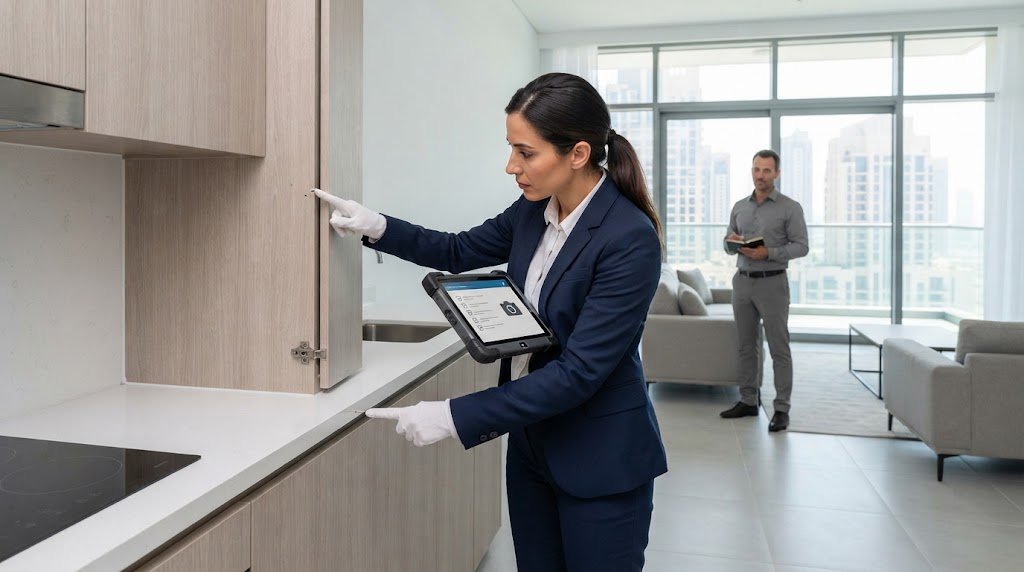
Accepting Without Checking
Handover is the last moment of real leverage you have with a developer. Once you accept the unit, defects become your problem to chase rather than theirs to fix.
Buyers who cannot travel often accept remotely on paperwork alone. Appointing someone to inspect before acceptance costs very little against the value of the asset, and it is the only point where the developer still has an incentive to act quickly.
Treat acceptance as a decision, not an administrative step.
Handover is where off-plan risk actually lands, and all three mistakes here share a cause: treating a projected date as a fixed one. Plan for a late delivery, a vacant quarter and an inspection you may need to delegate. Those three assumptions turn handover from a risk into a scheduled event.

The Long Term Cost
Entry mistakes cost you once. The ones in this section repeat every year you hold the property, which is what makes them the expensive category.
Dubai Property Mistakes
The Dubai property mistakes that compound are the ones tied to recurring obligations rather than one-off transactions. A service charge misjudged by AED 10 per square foot costs the same amount again every year for as long as you own the unit.
On a 1,200 square foot apartment, that single misjudgment is AED 12,000 annually, or roughly AUD 4,560. Over a ten-year hold, it exceeds AED 120,000 before any increase in the approved rate.
Recurring errors deserve far more checking time than one-off ones, and most buyers do the opposite.
Raising Rent Wrongly
Many Australian owners assume they can raise rent freely at renewal. Dubai caps increases by law under Decree No. 43 of 2013, and the ceiling depends on how far the current rent sits below the official market average.
The bands work as follows.
|
Current rent versus market average |
Maximum increase |
|
Less than 10 percent below |
No increase |
|
11 to 20 percent below |
5 percent |
|
21 to 30 percent below |
10 percent |
|
31 to 40 percent below |
15 percent |
|
More than 40 percent below |
20 percent |
The decree itself is published by the Dubai Land Department as a downloadable PDF, and you can check your benchmark on the department's rental index service.
There is a second requirement that invalidates an increase on its own. Under Article 14 of Law No. 26 of 2007, as amended by Law No. 33 of 2008, you must give at least ninety days' written notice before the tenancy expires. Serve it late, and the increase fails for that renewal even when the percentage was correct.
Ignoring Owner Liability
The final mistake is assuming the tenant carries the service charge. Under Law No. 6 of 2019, the owner is liable unless the lease says otherwise, and even then the owner is not released if the tenant fails to pay.
Unpaid charges escalate through late fees and legal notices to a registration block that stops you from selling or refinancing. For an absentee owner, that is a problem discovered at the worst possible moment.
If you appoint someone to manage the unit, check they hold the correct licence. The Dubai Land Department's real estate activity licensing separates managing your own property from managing somebody else's, and only the second category covers a manager acting for you.
Ownership mistakes are the ones that quietly repeat. Check the approved service charge annually, confirm your rent band before serving notice, and keep the liability sitting where the law actually puts it. Get those three right and ownership becomes administrative rather than expensive.
Avoid Costly Dubai Property Investment Mistakes
Every mistake in this guide has a free check that prevents it, and each one takes minutes rather than days. Budget the real entry cost, compare net yield against net, pull the approved service charge for the specific building, and confirm your rent band before serving any notice.
Bring your shortlist to the Dubai Property Expo Melbourne, and we will run those checks with you against the actual buildings you are considering.
Register now to secure your place.
Questions Buyers Ask Most
What is the biggest mistake Australians make buying Dubai property?
Budgeting the purchase price alone. Entry costs add roughly six to eight percent on top, with the four percent DLD transfer fee the largest single item, and buyers at the top of their budget get caught short at transfer.
Can Australians buy property in Dubai?
Yes. Foreign nationals can own freehold in Dubai's designated freehold areas with full title and no residency requirement, and ownership is registered with the Dubai Land Department.
How much are service charges in Dubai?
They range from around AED 3 per square foot for villas to approaching AED 68 for ultra-prime towers, approved building by building. Check the exact rate for your target building for free on the Dubai Land Department index before committing.
Does buying property in Dubai give you residency?
Not automatically. Property worth AED 2 million or more can support an application for the ten-year Golden Visa, which is a separate process, and our Dubai Golden Visa guide sets out the current position.
Can a landlord increase rent freely in Dubai?
No. Increases are capped under Decree No. 43 of 2013 at between zero and twenty percent depending on how far the rent sits below the market benchmark, and ninety days' written notice is required before the tenancy expires.