Quick Answer:
- Dubai delivers 8–12% rental yields for investors
- JVC and Marina attract strong rental demand
- Melbourne buyers benefit from Dubai’s tax-free income
- Off-plan projects start from an affordable AUD 250K
- Golden Visa benefits support long-term investor residency
Dubai property investment delivers rental yields of 8–12% with zero tax on income. Melbourne investors cannot find those numbers domestically in 2026. This guide covers exactly how to enter the Dubai market, what to expect, and why hundreds of Australians are making the move.
Melbourne’s property market recorded a quarterly decline of -0.6% in Q1 2026, while net rental yields sit below 3% in most suburbs, according to Cotality. Dubai offers a fundamentally different equation: lower entry costs, higher income, and a tax-free structure that keeps every dollar you earn.
By the end of this guide, you will know the legal process for Australians, the best areas to target, how payment plans work, and how to qualify for the UAE Golden Visa.
Why Melbourne Investors Are Choosing Dubai
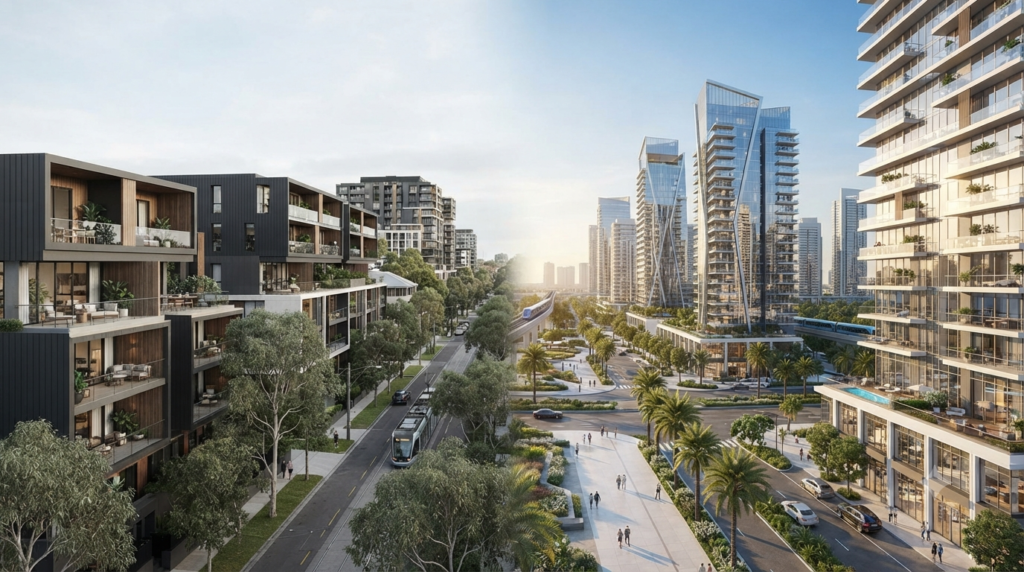
Melbourne investors are under pressure from both sides. Entry costs are high, and net returns are thin. A comparable Dubai property investment changes both variables at once.
In our experience working with Melbourne investors, the most common reaction after seeing Dubai’s rental yield data is disbelief. A AUD 400K apartment in a Dubai growth corridor generating 9% annual yield simply has no equivalent here.
Key reasons Melbourne investors are entering the Dubai market right now:
- Rental yields of 8–12% versus Melbourne’s gross rental yield of 3.5%, per Cotality’s March 2026 Home Value Index
- Zero income tax on rental earnings, meaning no ATO liability on Dubai rental income
- Off-plan payment plans starting from 10% down, spread interest-free over 3–5 years
- UAE Golden Visa eligibility from AED 2 million (approximately AUD 850K)
- 100% foreign ownership rights in designated freehold zones
- AUD-denominated entry from approximately AUD 250K for studio apartments
The USD-AED peg also protects Melbourne investors from currency volatility. The dirham has been pegged to the US dollar since 1997, providing a stable pricing anchor for Australian buyers.
What Rental Yields Can Melbourne Investors Expect?
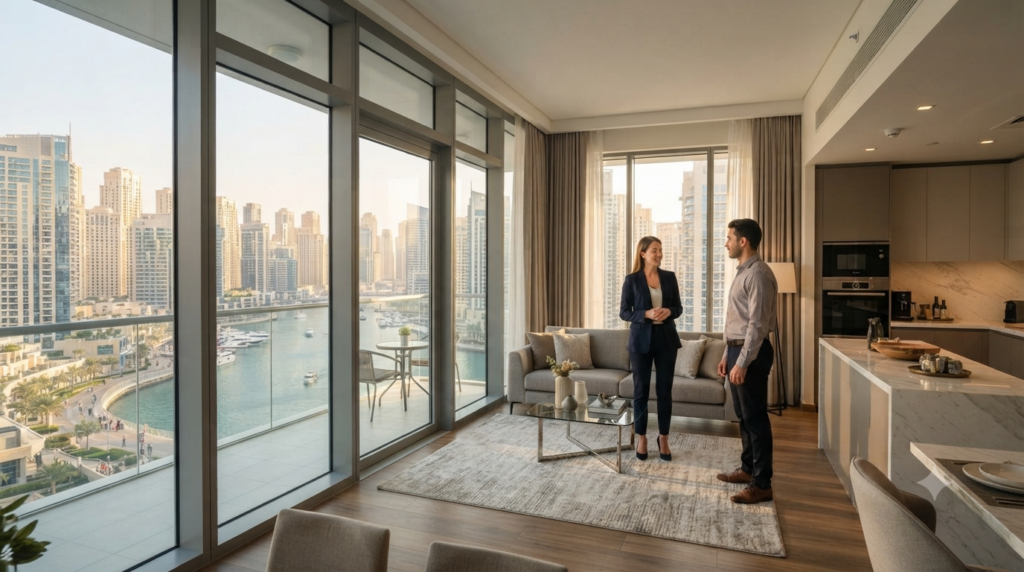
Dubai’s rental yields consistently outperform every major comparable market. Melbourne, Sydney, London, and Singapore all sit well below Dubai’s averages.
What we have consistently observed is that Melbourne investors who enter Dubai’s mid-tier apartment market target a yield band of 7–10%, with short-term rental strategies in tourist-heavy precincts pushing returns above 11%.
Average yields by area in 2026, per the Dubai Land Department:
- Dubai Marina: 7–9% gross yield, strong short-let demand
- Jumeirah Village Circle (JVC): 8–10% gross yield, popular with Melbourne investors seeking affordability
- Downtown Dubai: 7–8%, premium pricing but strong capital growth
- Business Bay: 7–9%, driven by professional expatriate demand
- Dubai Silicon Oasis: 8–10%, growing tech and education precinct
Long-term residential leases in Dubai also carry a cost advantage over Melbourne. In many standard lease agreements, Dubai property investment management fees are covered by tenants, not landlords. Melbourne investors retain a significantly higher share of gross income than in any comparable Australian or UK market. You can explore these yield comparisons in more detail in our guide on Dubai rental properties for Melbourne investors.
How Do Australians Buy Property in Dubai Legally?
The legal process is straightforward. Australians do not need a visa, local sponsor, or residency status to purchase freehold property in Dubai’s designated zones.
After helping hundreds of Melbourne buyers enter the Dubai market, the most surprising feedback we receive is how simple the process actually is compared to purchasing in Victoria. Our complete guide on buying property in Dubai from Melbourne covers every legal detail.
Step-by-step process for Melbourne investors:
- Step 1: Select a property in a designated freehold zone (Dubai Marina, Downtown, Palm Jumeirah, JVC, and others)
- Step 2: Pay a reservation deposit, typically 5–10% of the property value
- Step 3: Sign the Sales Purchase Agreement (SPA) with the developer or seller
- Step 4: Register the transaction with the Dubai Land Department, paying a 4% registration fee
- Step 5: Receive your title deed, issued directly by the DLD
Documents required from Australian buyers: a valid passport, an email address, and a mobile number. No property tax, no stamp duty beyond the DLD fee, and no capital gains tax on resale.
For off-plan purchases, buyers pay an initial deposit of 10–25%, with the balance spread over the construction period. Most reputable developers offer interest-free installment plans on a 1% monthly schedule.
Can I Buy Dubai Property with a Payment Plan?
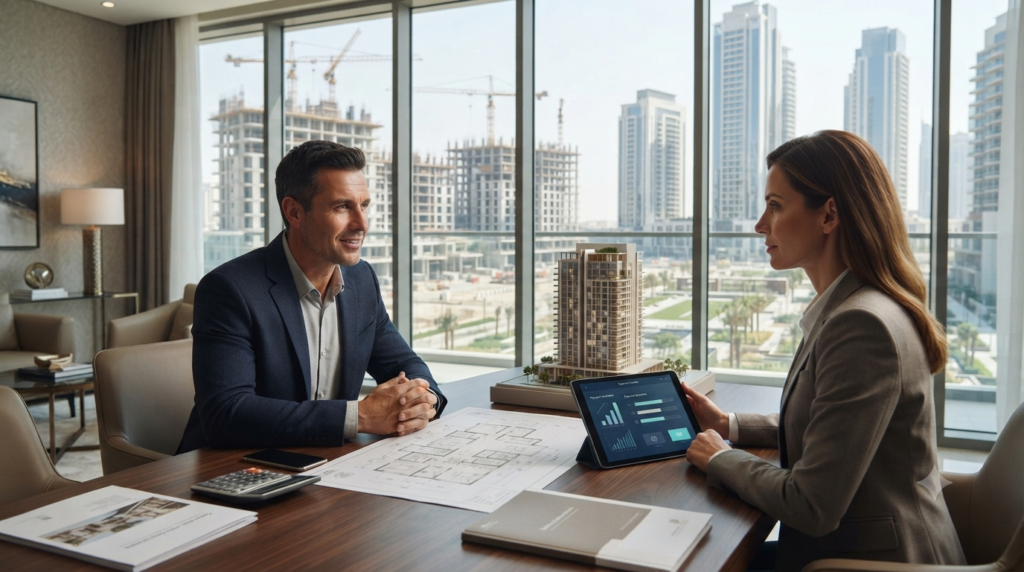
Yes. Off-plan payment plans are the most common entry route for Melbourne investors in 2026. Developers, including Emaar, DAMAC, Binghatti, and Imtiaz, offer interest-free installment structures that remove the need for a large upfront capital commitment.
From years of advising investors across Melbourne, the payment plan structure is consistently the deciding factor. Being able to enter a Dubai property at 10% down while retaining capital for other Dubai property investments is a combination Melbourne buyers find extremely attractive.
Typical off-plan payment plan structures:
- 10% on reservation
- 40% during construction (paid in monthly or quarterly installments)
- 50% on handover or spread post-handover over 2–3 years
- Entry prices starting from AED 600K (approximately AUD 250K) for studios in JVC and Dubai South
Post-handover payment plans are also available from select developers. These allow Melbourne investors to begin generating rental income before completing the full purchase payment. Capital appreciation between launch pricing and handover has averaged 15–30% in growth corridors over recent cycles, according to Knight Frank’s Dubai market data. For a full breakdown of the step-by-step purchase process, read our guide on how to buy property in Dubai from Australia.
UAE Golden Visa: What Melbourne Investors Need to Know

The UAE Golden Visa is a long-term residency program available to property investors purchasing qualifying assets. It is one of the most significant policy changes in the Dubai property investment landscape over the past five years.
Key Golden Visa thresholds for property investors:
- AED 750,000 (approximately AUD 315K): 2-year investor visa
- AED 2 million (approximately AUD 850K): 10-year Golden Visa
- Visa covers the investor, spouse, and dependents
- No local sponsor required
- Renewable without continuous residency in the UAE
For Melbourne investors, the Golden Visa transforms a Dubai property investment from a financial asset into a lifestyle and security asset. Families gain the right to live, work, and study in the UAE. The visa is particularly attractive for Melbourne investors planning medium-term relocation or those seeking a regional base across the Asia-Pacific corridor. Our dedicated guide on Dubai golden visa property for Melbourne investors covers every eligibility rule and application step in full.
Property does not need to be tenanted or occupied for Golden Visa eligibility. Mortgage-held properties also qualify, provided the paid equity meets the AED 750K threshold.
Best Areas for Melbourne Investors in Dubai
Location selection is the most consequential decision in Dubai property investment. Growth corridors outperform established prime areas on yield. Established precincts outperform on capital appreciation.
Dubai Marina delivers consistent rental demand from professionals and tourists. Average yields sit at 7–9%. The area commands premium resale pricing due to waterfront positioning and proximity to JBR.
JVC (Jumeirah Village Circle) is the top entry-point market for Melbourne investors in 2026. Yields of 8–10%, affordable pricing, family infrastructure, and excellent connectivity make it the most popular choice for first-time Dubai buyers from Australia.
Business Bay attracts corporate tenants and delivers stable long-term rental income. Proximity to Downtown Dubai and the Burj Khalifa supports ongoing capital growth.
Dubai South and Dubai Silicon Oasis are the emerging growth plays. Both benefit from infrastructure under the Dubai 2040 Urban Master Plan, which includes a 134% increase in land area for tourism and hotel development.
Downtown Dubai carries the highest entry price but delivers the most reliable long-term appreciation. For Melbourne investors with larger capital allocations, Downtown remains the benchmark for premium Dubai property investment.
Ready to Invest in Dubai from Melbourne?
Dubai property investment offers Melbourne investors a combination unavailable in the domestic market: 8–12% rental yields, zero tax on income, interest-free payment plans from AED 600K, and UAE Golden Visa eligibility for qualifying purchases.
The national gross rental yield in Australia fell to 3.56% at the end of 2025, per Cotality’s latest rental market update. Meanwhile, Dubai continues to build on record transaction volumes with a population growing at over 17,000 new residents per month. Every metric that drives rental demand is moving in the right direction.
Register your interest today at the Dubai Property Expo Melbourne and speak with an advisor who works exclusively with Australian investors.
Frequently Asked Questions
Can Melbourne investors buy property in Dubai without visiting?
Yes. Melbourne investors can complete the full Dubai property purchase process remotely using digital contracts and international bank transfers. Most buyers complete reservations, agreements, and title registration without flying to Dubai. The process is handled through developers, legal representatives, and RERA-licensed brokers.
Is Dubai property investment safe for Australians?
Dubai’s real estate market is regulated by the Dubai Land Department and RERA, which protect international buyers through escrow laws and regulated transactions. Buyer funds for off-plan properties are held in project-specific escrow accounts until construction milestones are met. These protections make Dubai one of the most transparent property markets for overseas investors.
Does the ATO tax Dubai rental income?
Yes. Australian tax residents must declare Dubai rental income to the ATO as foreign income. However, because Dubai applies no local rental income tax, there is no double taxation at source. Many investors also explore SMSF structures to improve tax efficiency on overseas property income.
What is the minimum investment for Melbourne investors?
Dubai property investment is accessible from approximately AUD 250,000 for studios and one-bedroom apartments in communities such as JVC and Dubai South. Mid-range apartments in Business Bay and Dubai Marina typically require higher capital. Golden Visa eligibility begins from AED 750,000 in qualifying property value.
How does Dubai property investment compare to Melbourne property?
Dubai generally offers higher rental yields, lower entry prices, and fewer ongoing taxes compared to Melbourne. Victoria was judged the worst of all eight states and territories for property investors after new land taxes were introduced in 2023, according to the Property Investment Professionals of Australia. Many Dubai communities deliver 7% to 12% gross rental returns compared to Melbourne’s 3.5%. This difference continues to attract Australian investors seeking stronger cash flow and long-term growth.